A few lines and the pictures for each chapter. Click a chapter to open its gallery; the stories themselves are in the book.
Forty-Nine Years – Stolpen Castle
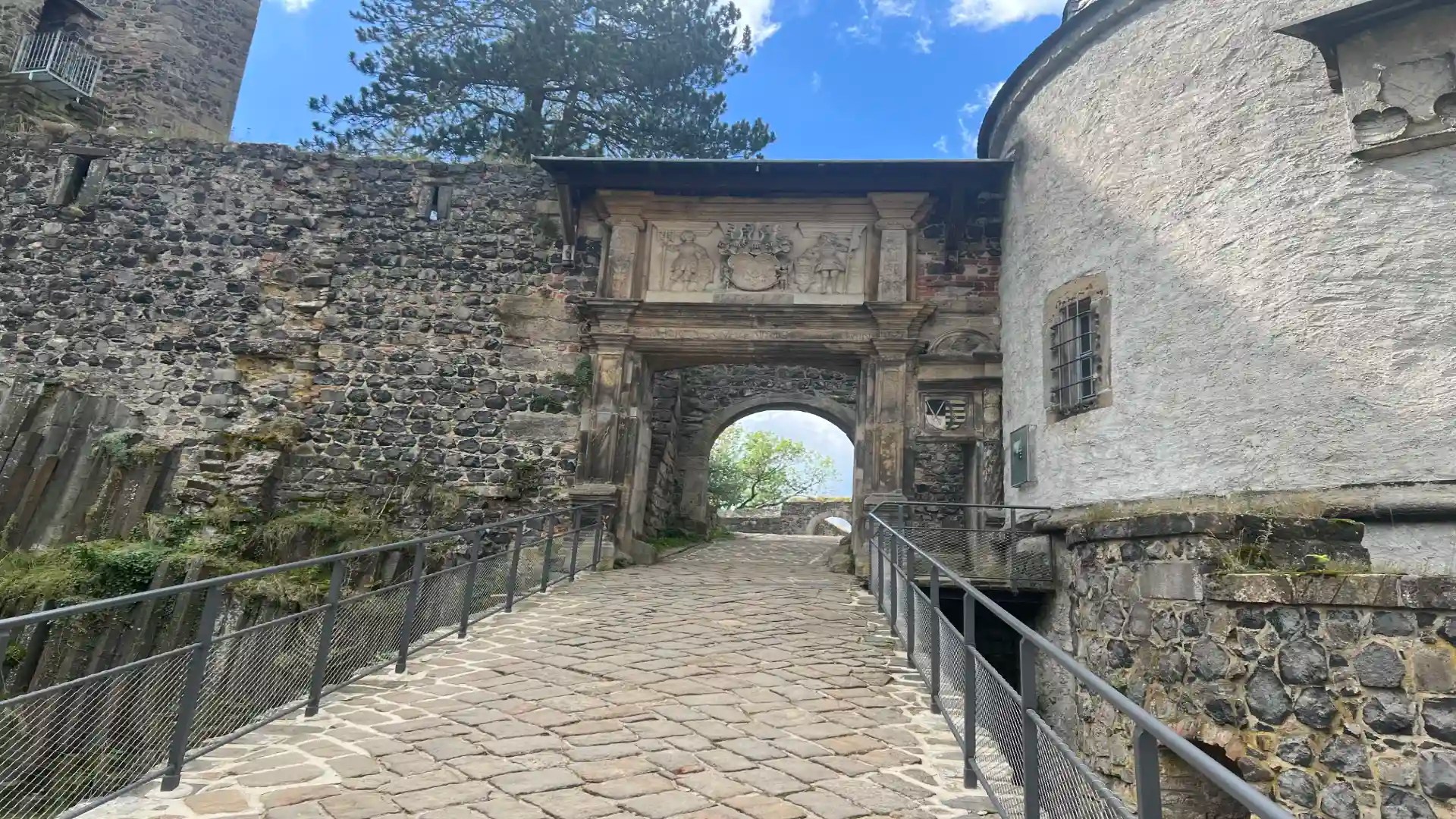
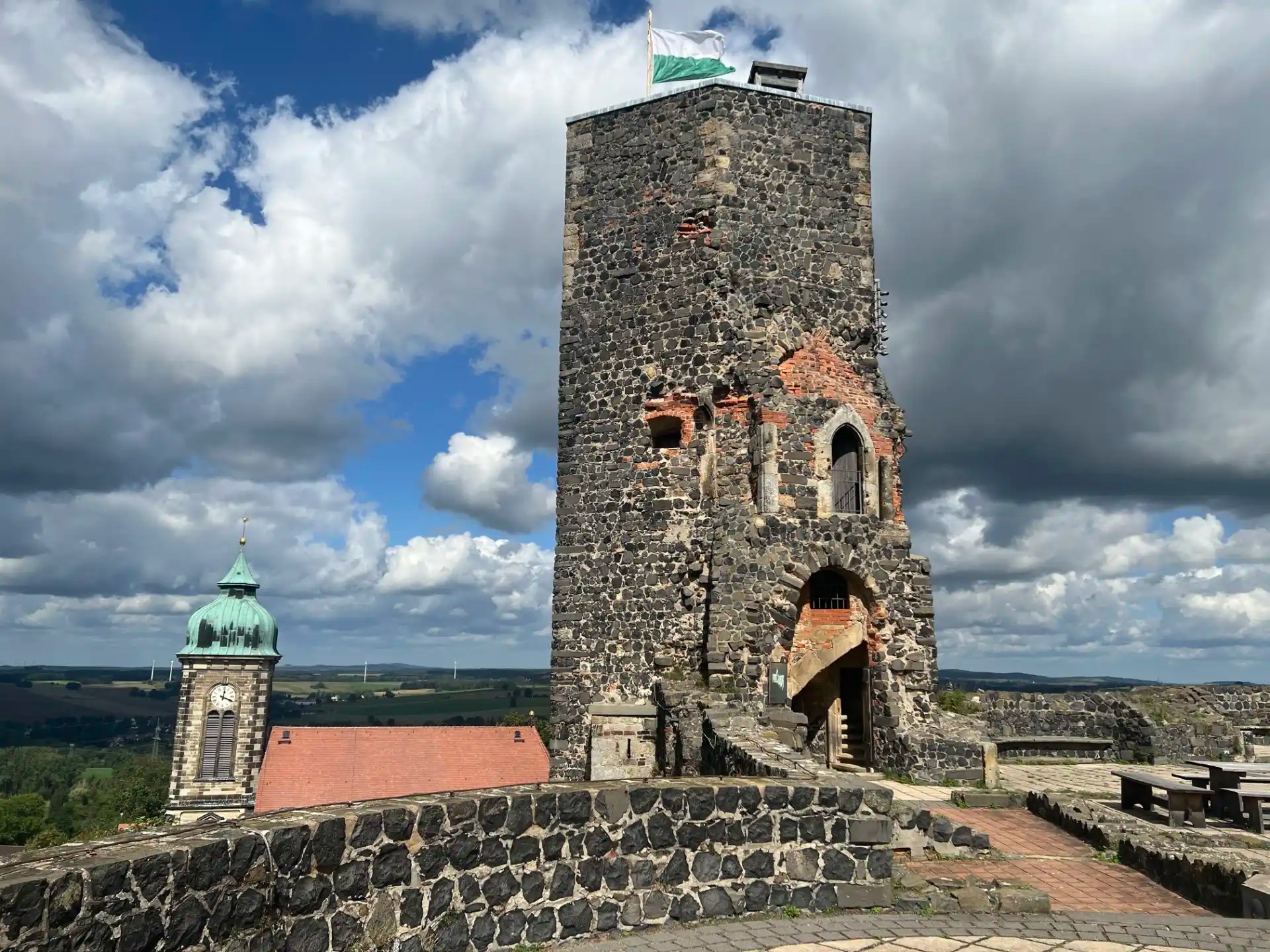
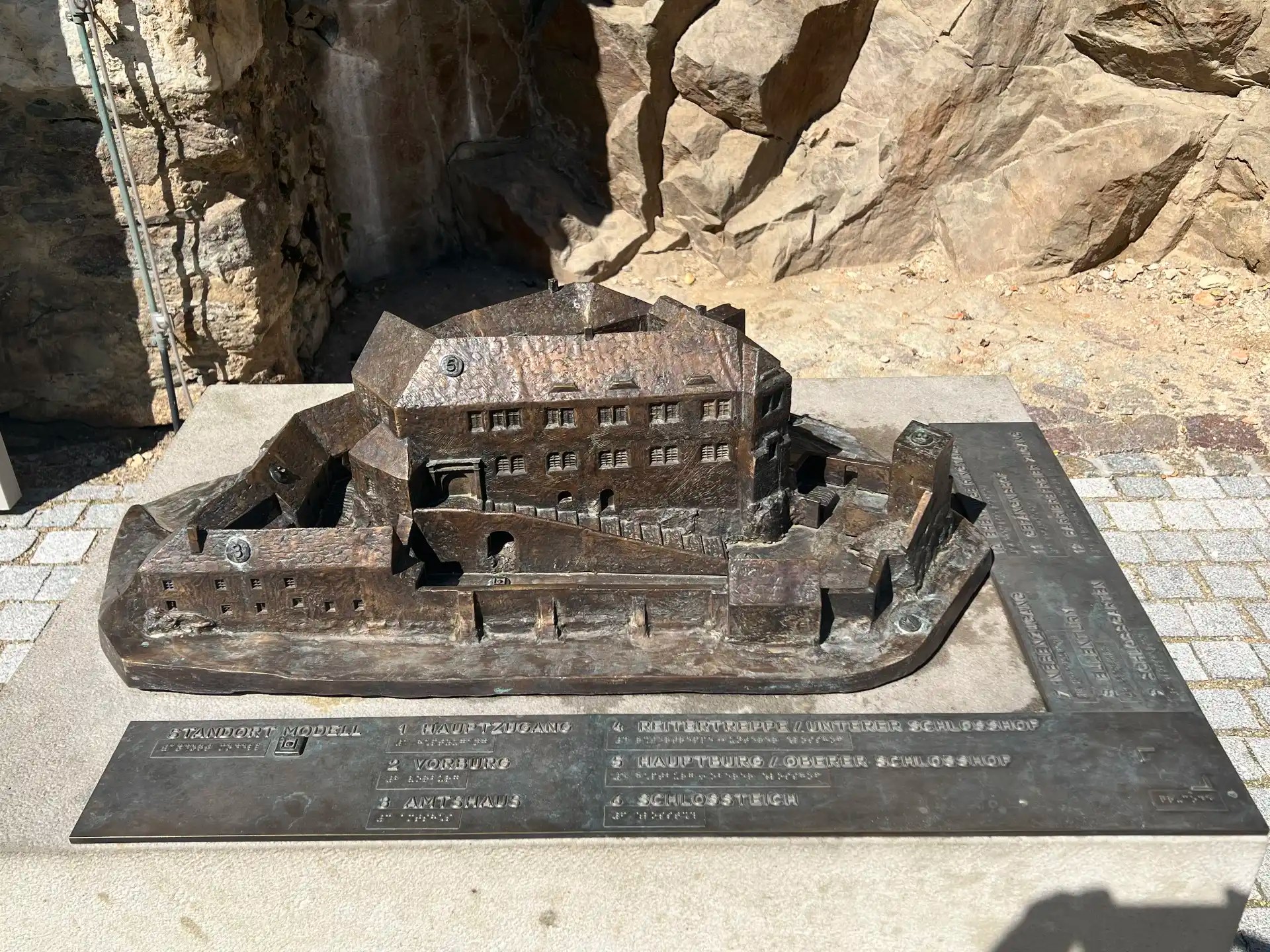
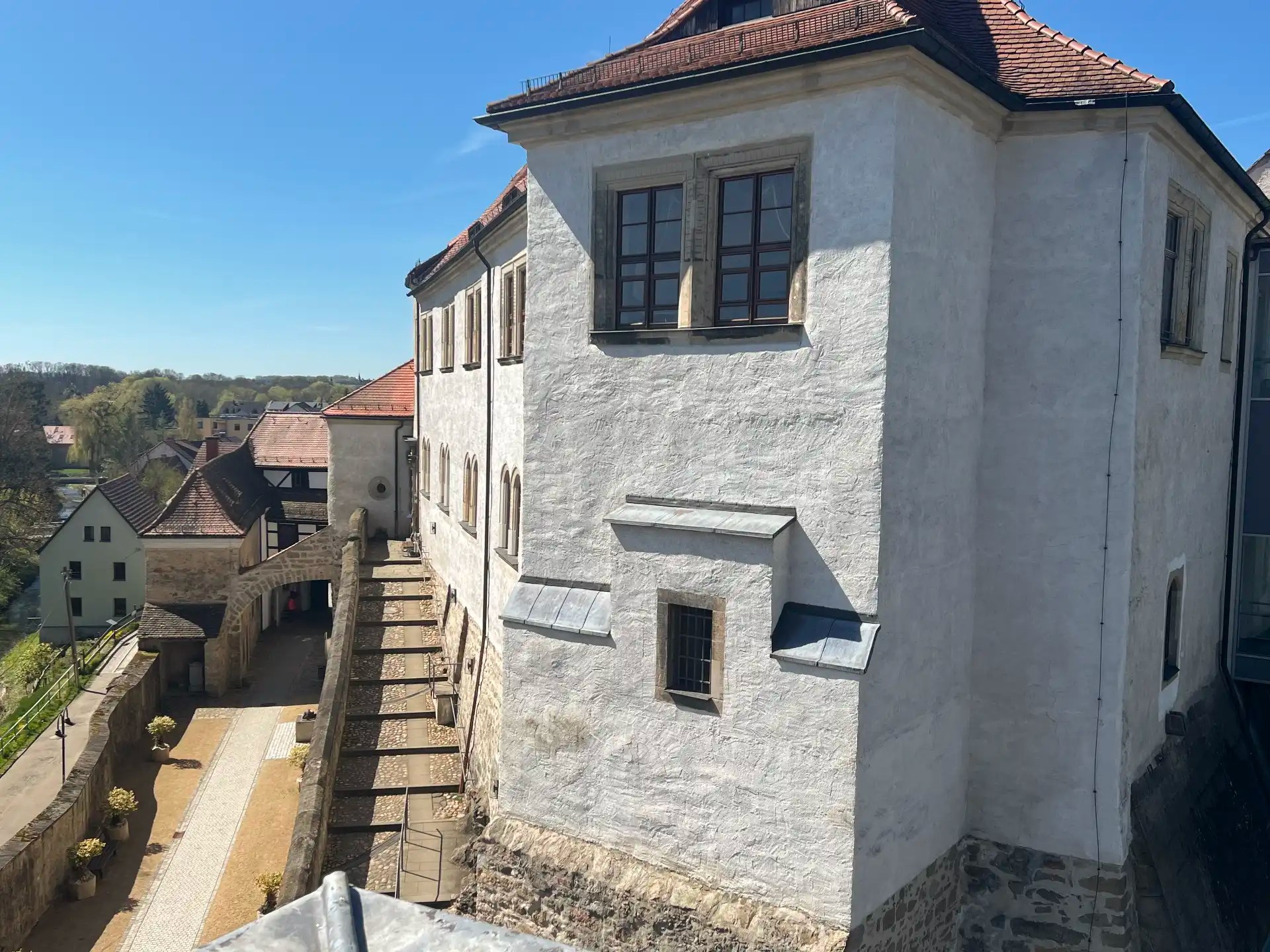
Stolpen Castle near Dresden: Countess Cosel was held prisoner here for 49 years. Add a well sunk deep into basalt – and four siblings who made it all the way to Oz.
Heute wirkt die Anlage dabei nicht herausgeputzt, sondern überzeugend gebraucht – als hätte sie sich daran gewöhnt, Wetter und Geschichte gleich ruhig auszuhalten.
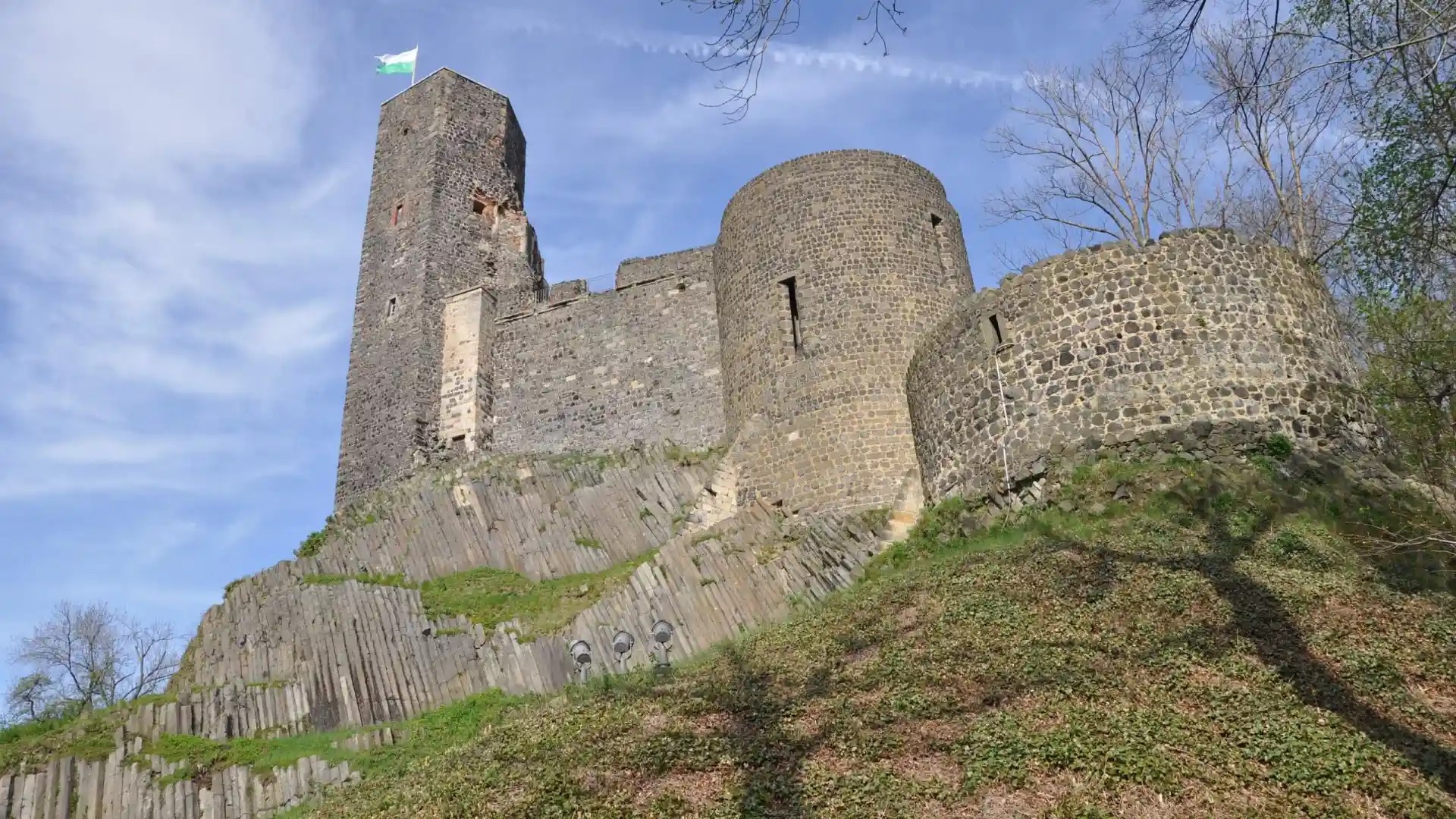
Basalt – not decorative but decisive. Stolpen’s basalt is a National Geotope; the rock looks like frozen movement.
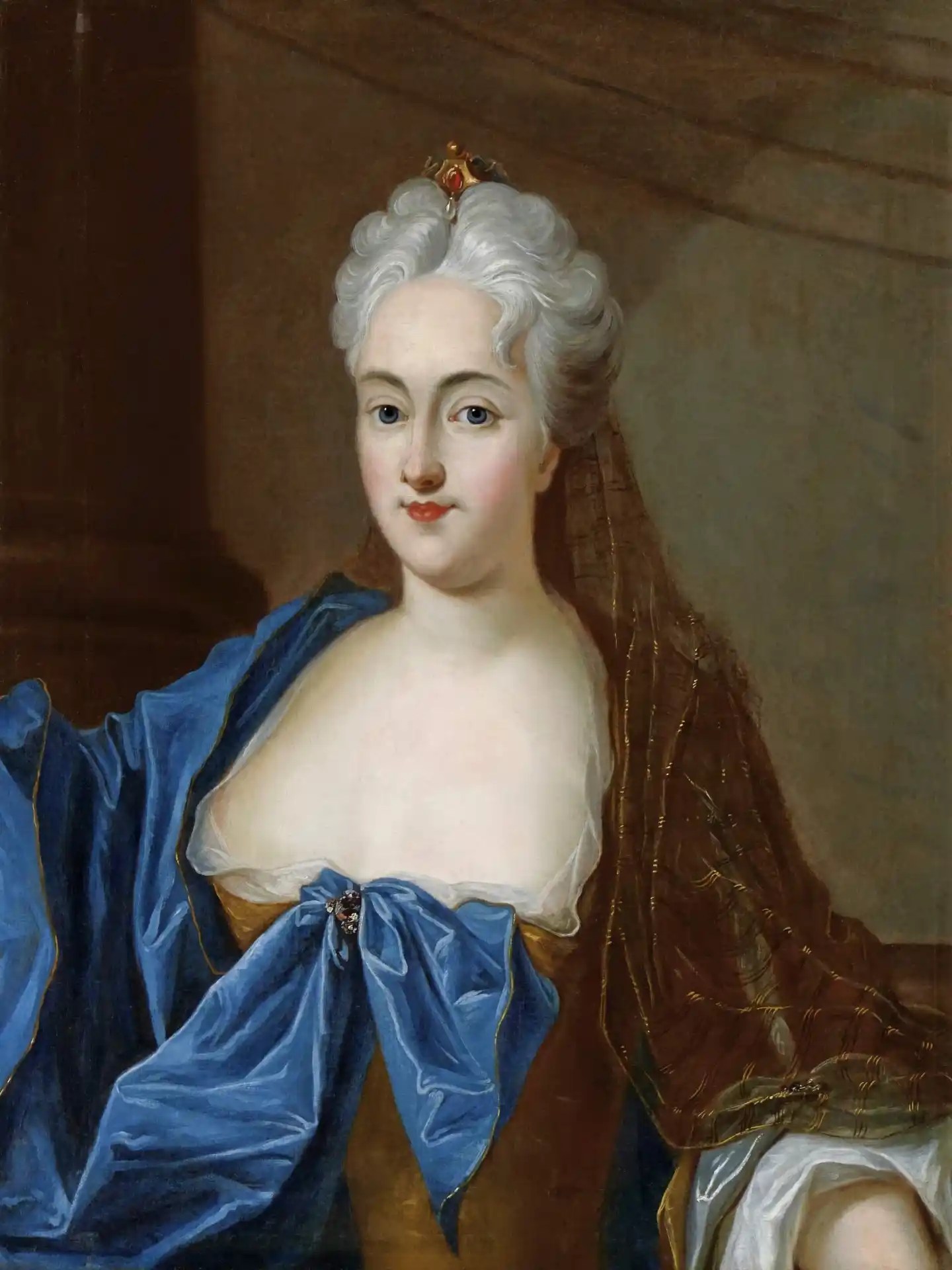
Stolpen has one figure who writes herself into every corner: Anna Constantia von Brockdorff, Countess Cosel (licence: public domain; source: Wikimedia).
A fortification in a strategically favourable spot – built to protect, to live in, to keep control.
Today the castle doesn’t look spruced up but convincingly lived in – as if it has grown used to bearing weather and history with the same calm.
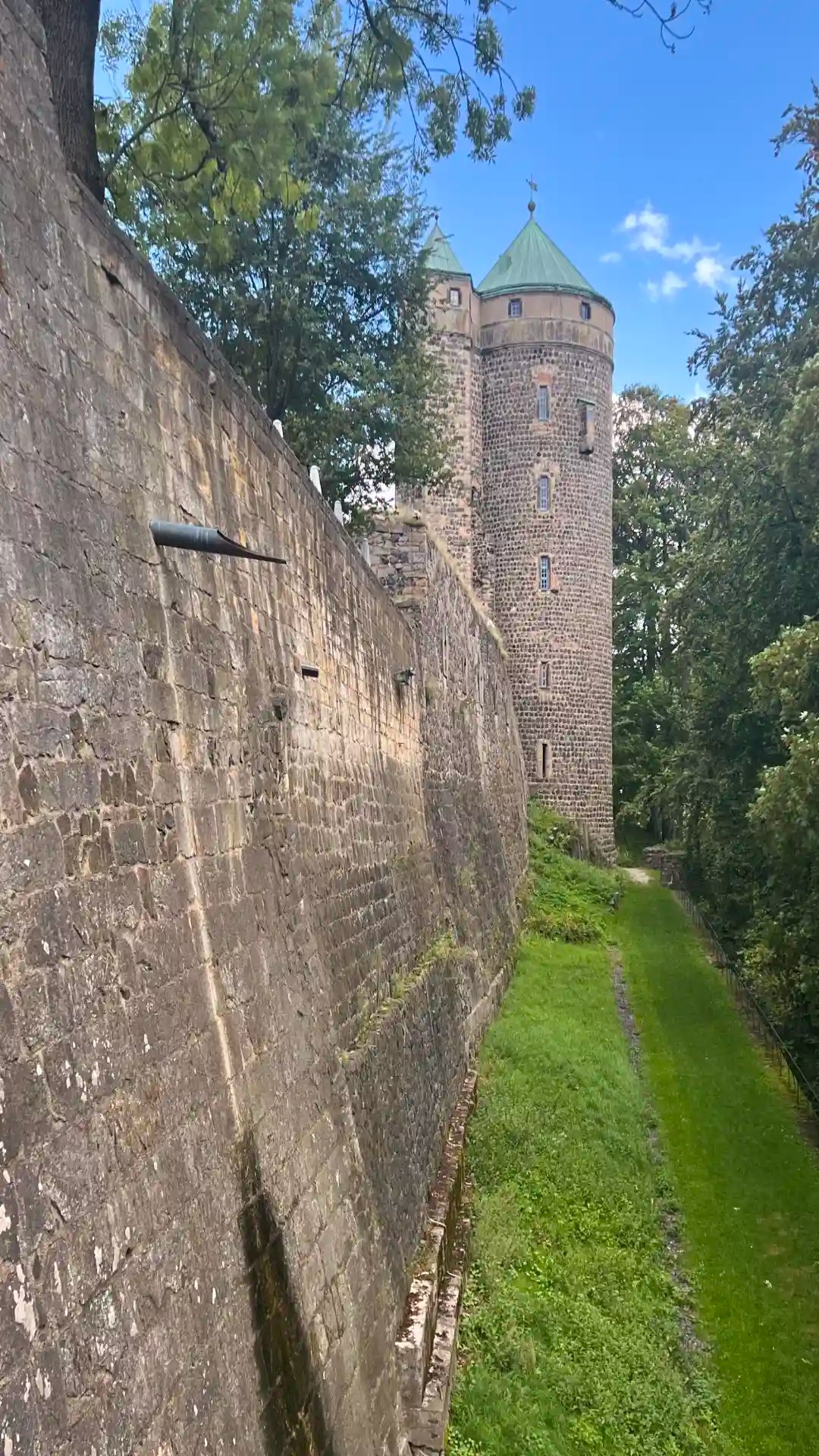
You cross the castle courtyard, walk along the walls and climb up into the towers.
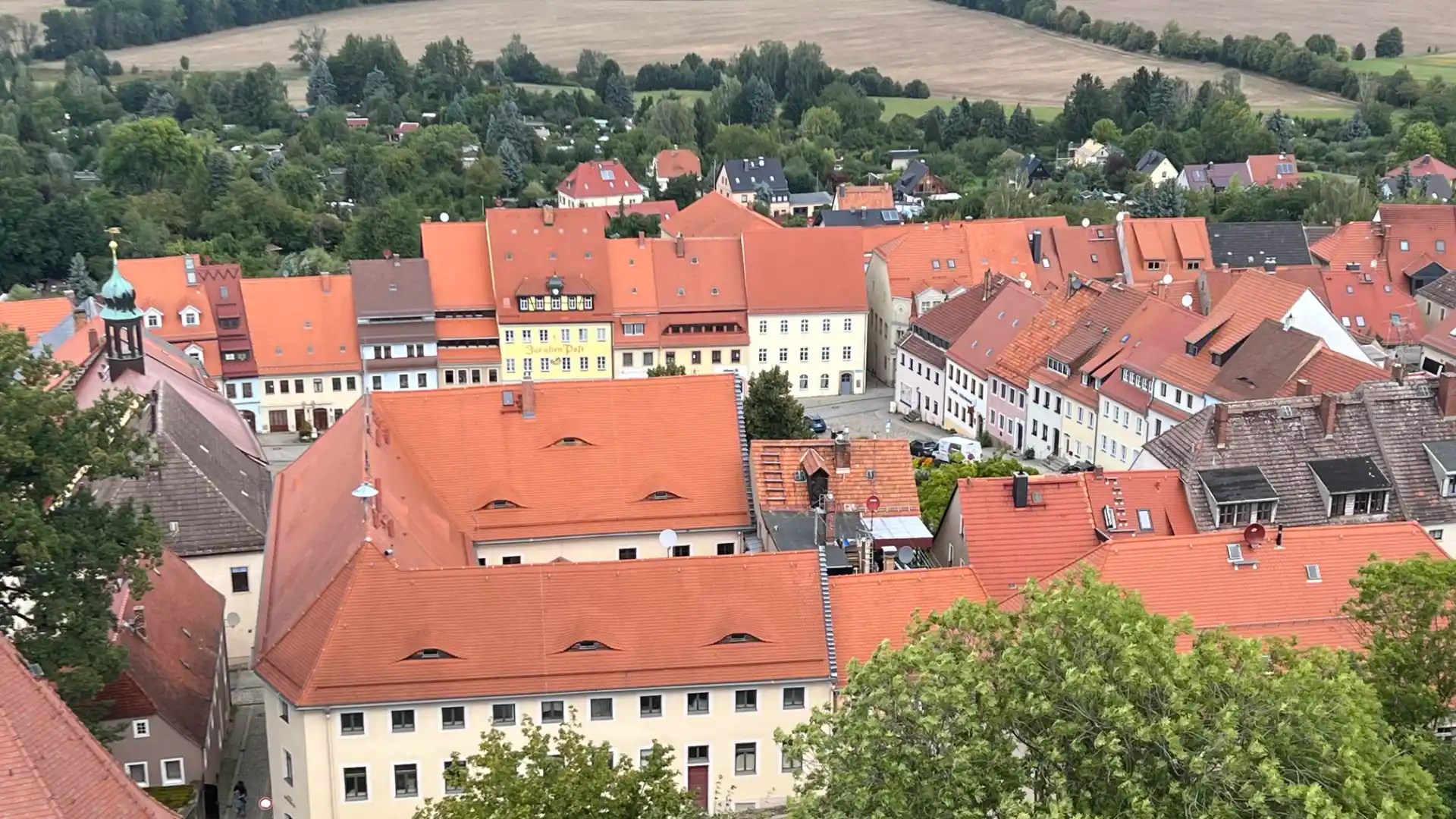
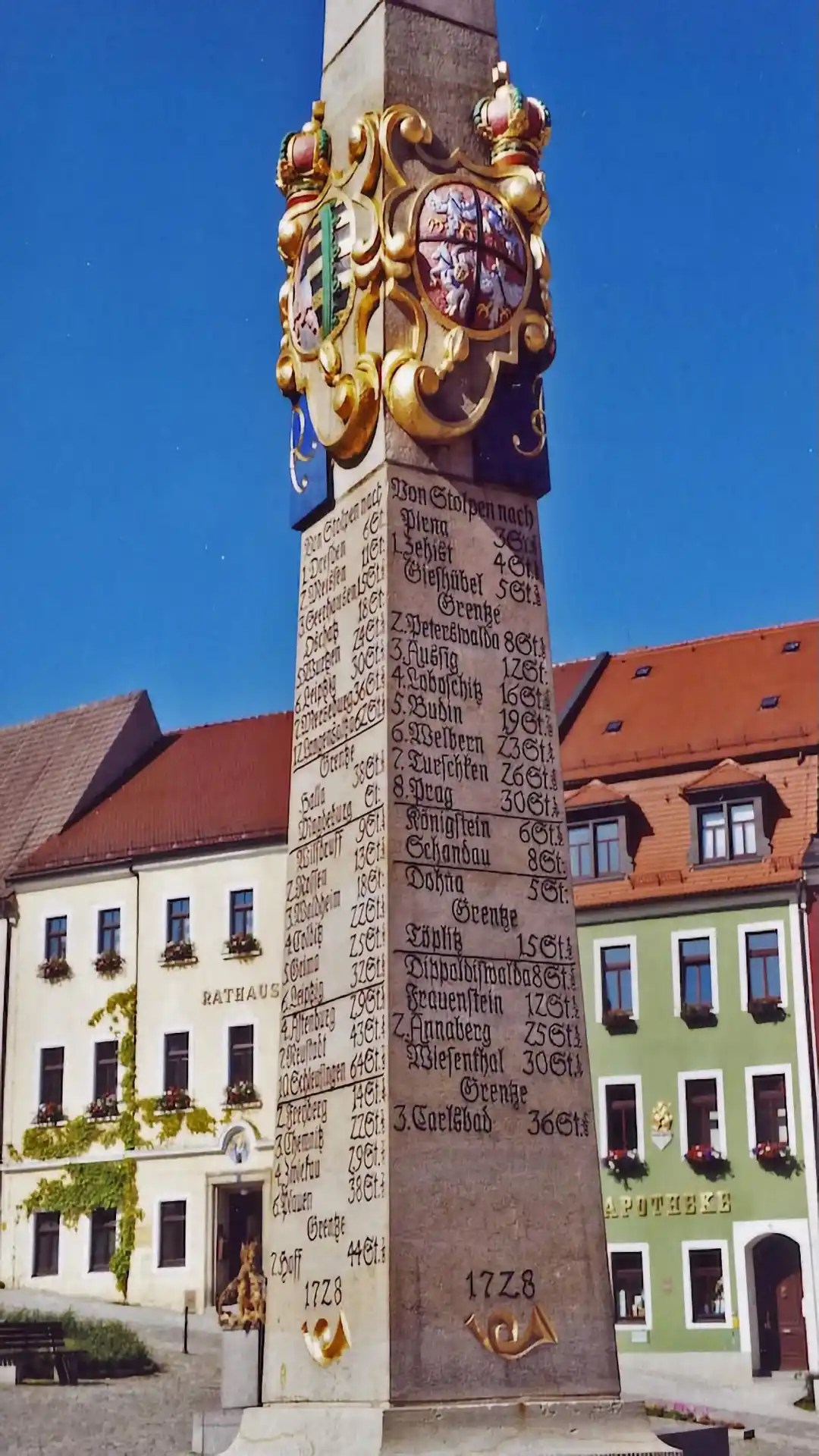
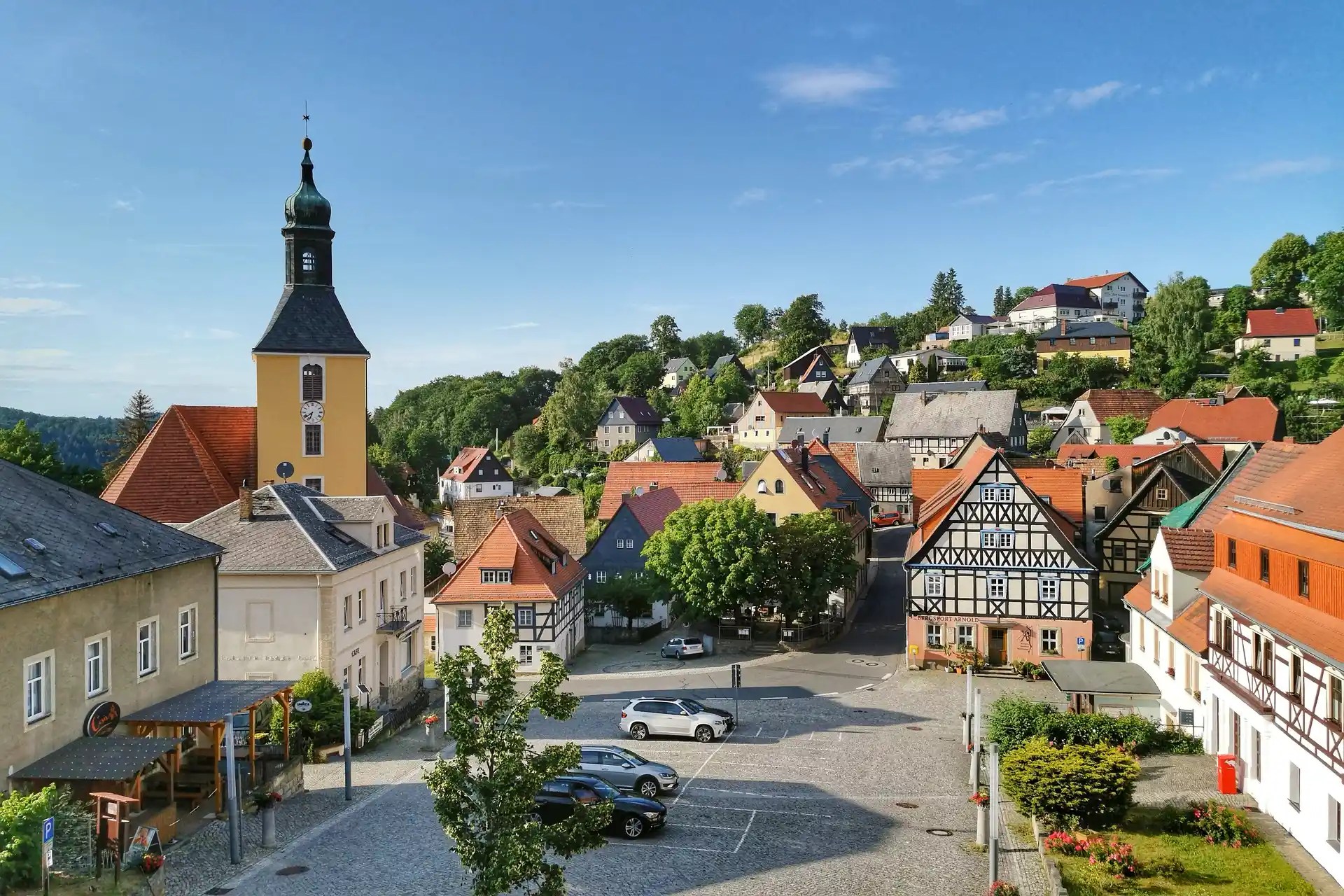
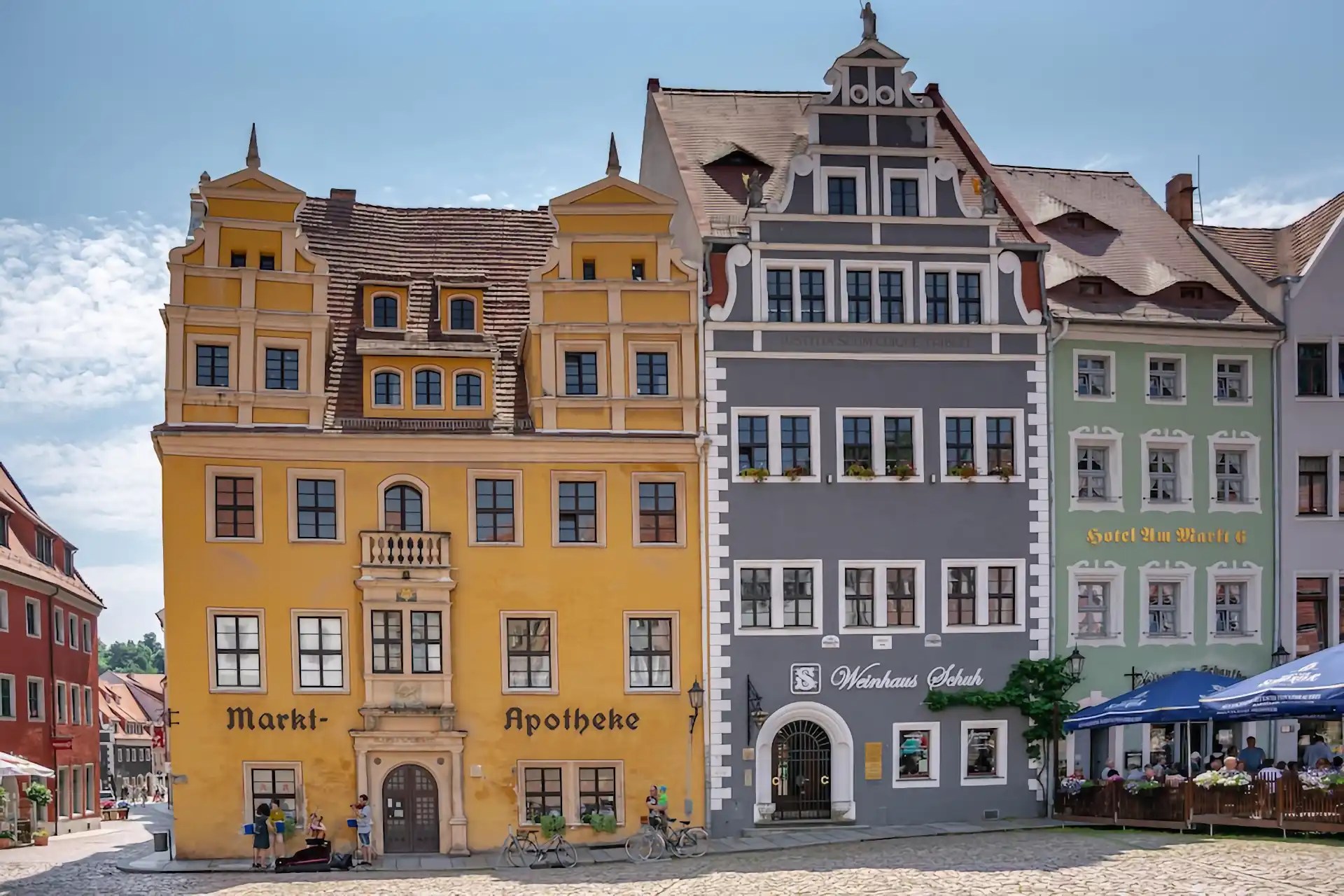
Narrow lanes, cobblestones, old houses – and in the market square an Electoral Saxon postal milestone that gives distances not in kilometres but in hours.
A postal milestone that gives distances not in kilometres but in hours. Why? A palace in the Eastern Ore Mountains explains.
The landscape softens, the hills turn green, and suddenly there’s a castle on a basalt rock, as if someone had placed it exactly where travellers automatically slow down.
From Swords to Rucksacks – Hohnstein Castle
Hohnstein Castle in Saxon Switzerland: a Bohemian fief, a bear pit, once Germany’s largest youth hostel – and a visit from Tagore.
Stand in front of Hohnstein Castle and you understand at once why castle builders had a weakness for dramatic rocky outcrops: it was simply the best insurance against uninvited guests.
Caspar David Friedrich passed this way and sketched – the rocks and the river.
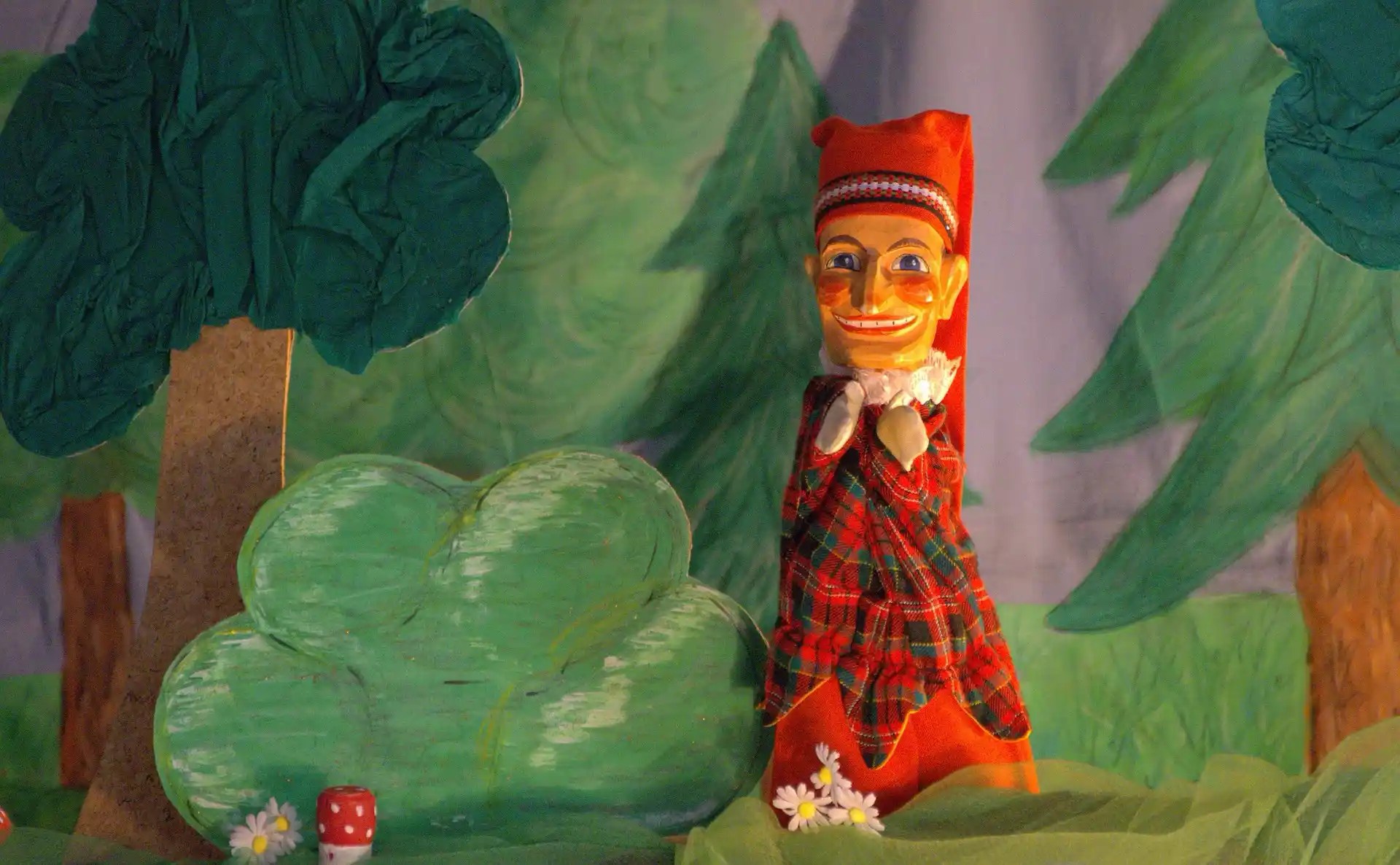
The puppeteer Max Jacob brought his stage to the castle, and the carved heads made there became so well known that a whole type of glove puppet is still named after the little town.
Hohnstein proves that you can still be right in the thick of life at almost 700 years old – if you’re willing to swap your armour for hiking boots.
Luxury for Home Use – Rammenau Baroque Palace
Rammenau Baroque Palace: a patron who went bankrupt, a dog as emperor, a naturalist and young Fichte, the goose boy.
In architecture, Baroque mostly means staging – but this one is surprisingly approachable, as if someone had taken the grand gesture and given it a comfortable armchair.
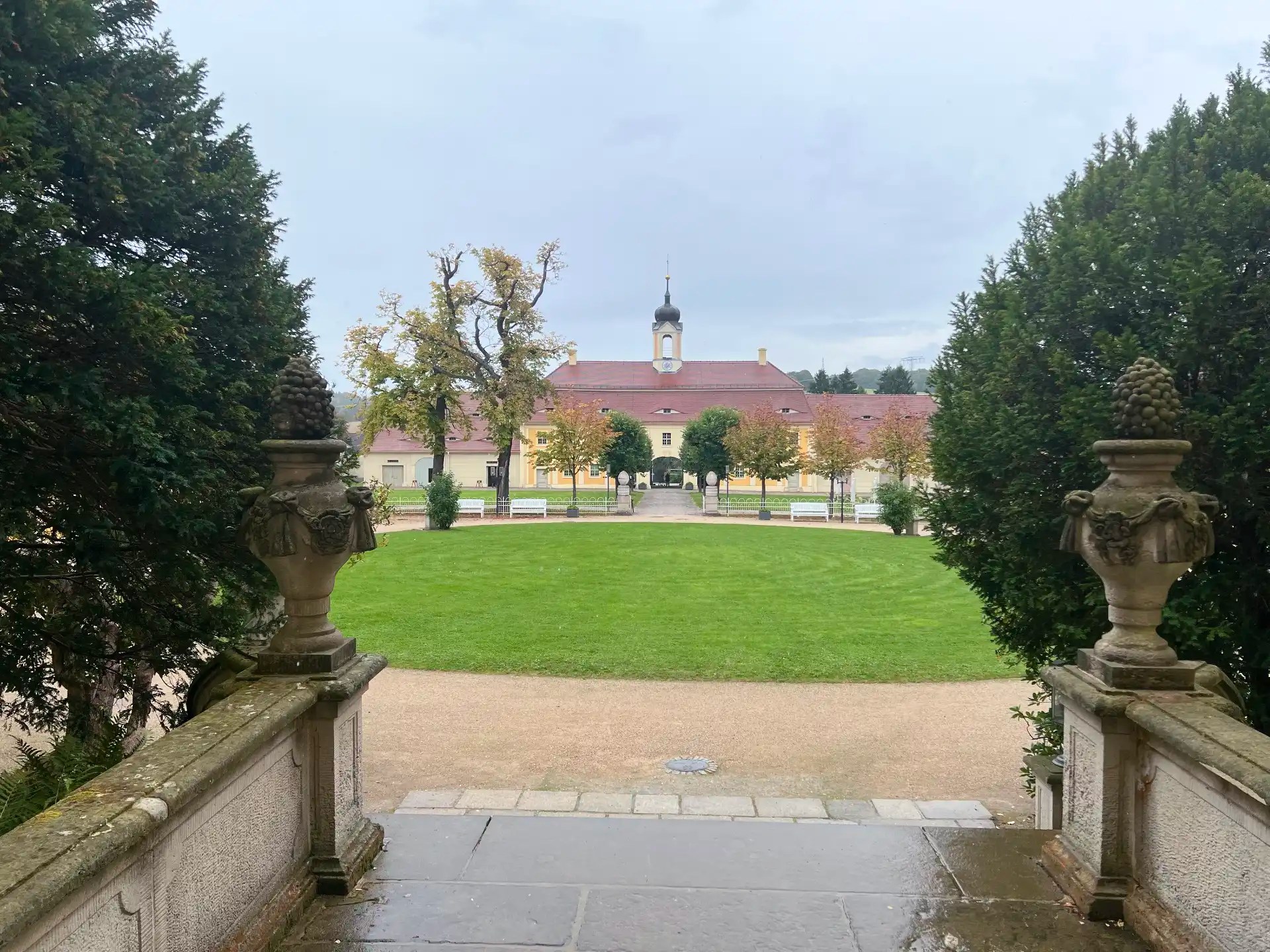
Baroque outside, Neoclassical inside, an English park behind.
Symmetrical façades, a cour d’honneur that sets the mood before you even reach the house, an orangery and a garden in which nothing was left to chance.
Hunting Meets Industry – Klippenstein Castle
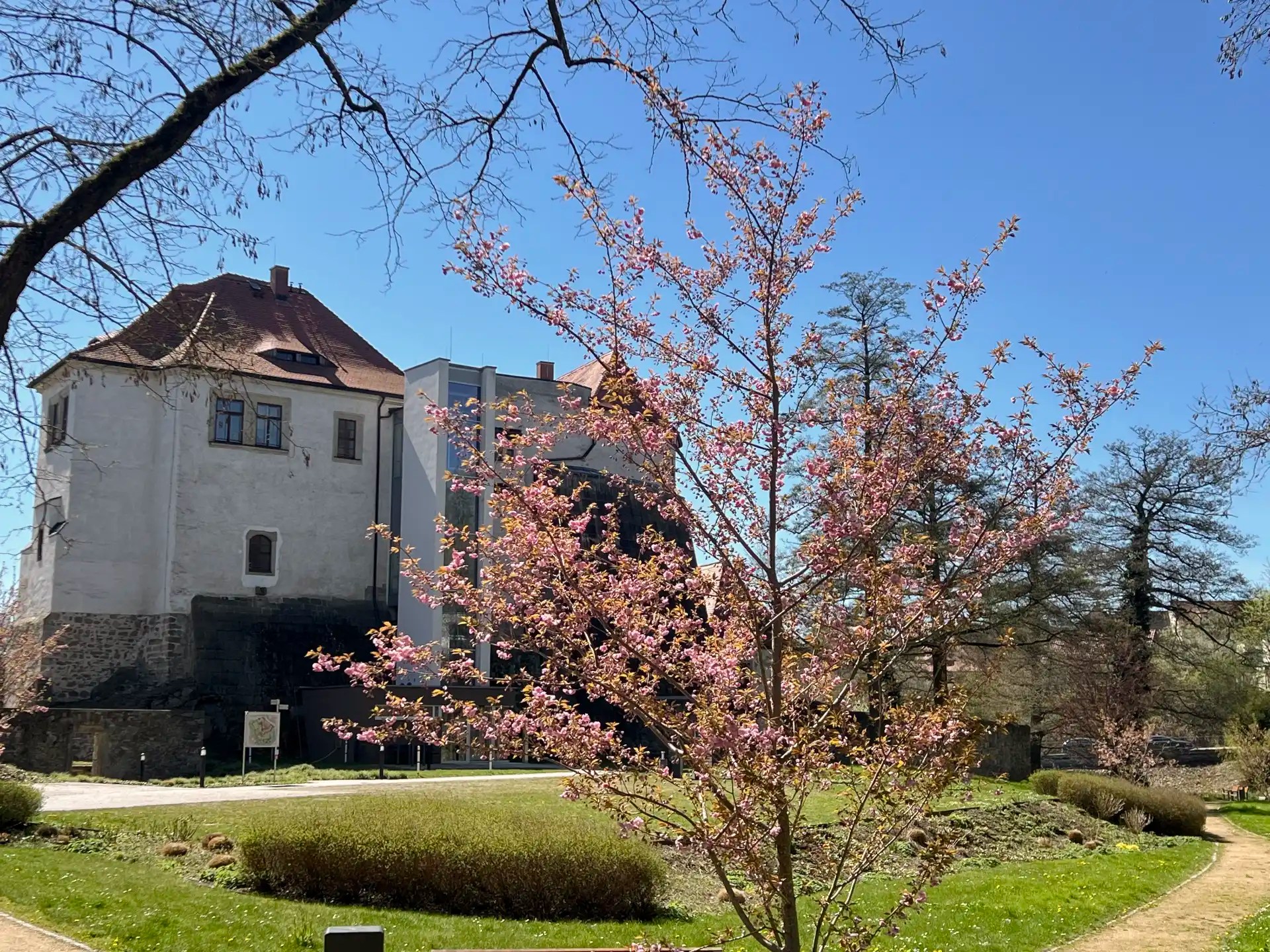
Klippenstein in Radeberg sits on its rocky ledge above the Röder, as if someone had reserved the best seat in town back in the 13th century.
Duke Moritz, later Elector, had the medieval castle turned into a hunting lodge in the 16th century – the same Moritz after whom Moritzburg is named. It still shapes the building’s look today.
What’s unexpected about Klippenstein is how down-to-earth it is.
Don’t expect a parade of dates here – instead, a trail of clues that explains how a town worked over the centuries and how machines and walls belong together.
The Trendsetter on Castle Hill – Albrechtsburg Meissen
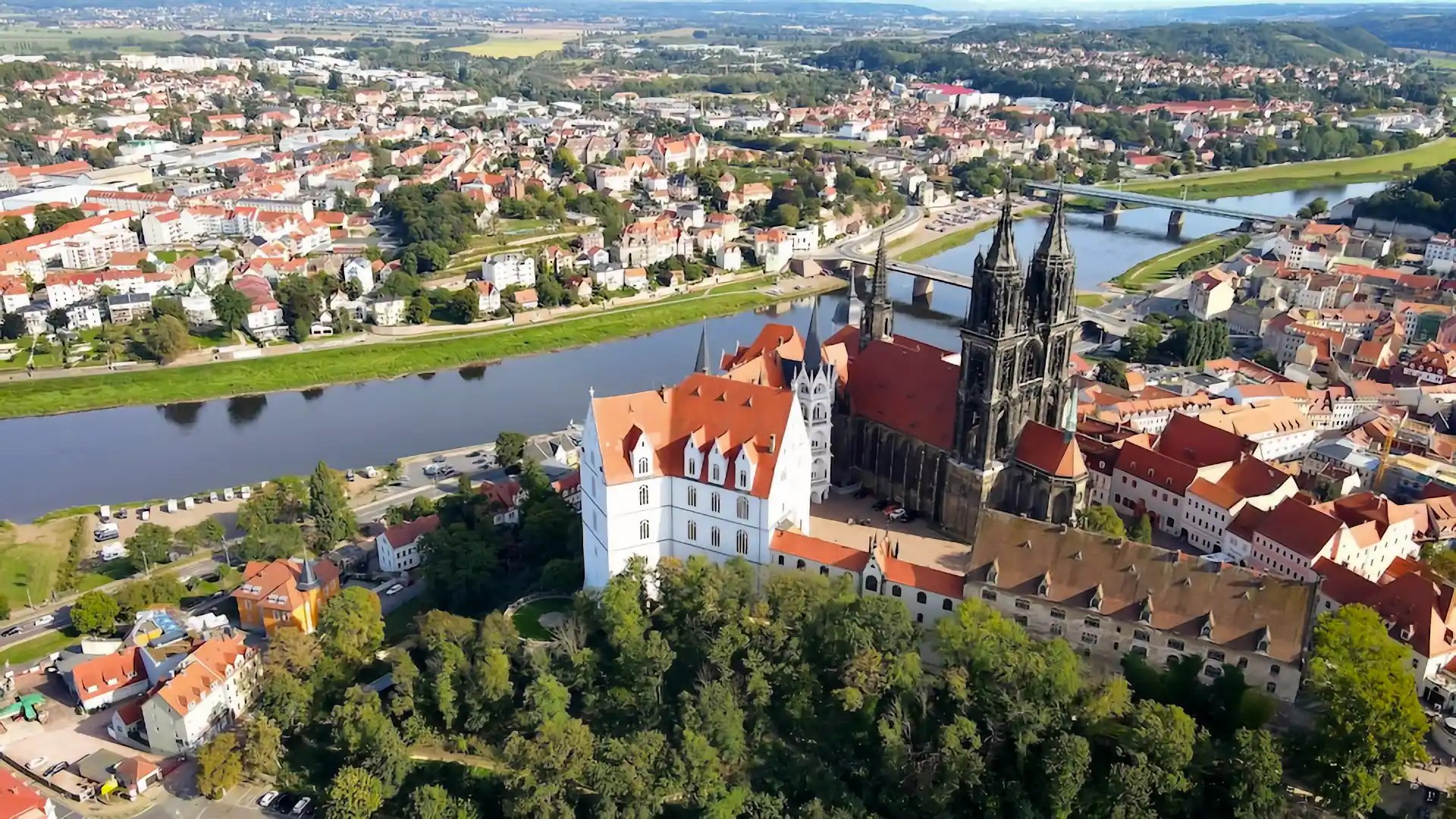
Albrechtsburg Meissen: Germany’s first palace, into which nobody ever moved – and which later housed Europe’s first porcelain manufactory.
The Albrechtsburg is more than a historic pile of stones; it’s a statement of courage, inventiveness and the wish to make things a little more beautiful than they strictly need to be.
The town is always looking up at its palace, but the palace only shows its true face to those who make the effort to stand right in front of it.
The Albrechtsburg dominates the town’s skyline and is inseparable from Meissen, but it likes to play hide-and-seek. Stand in the winding lanes of the old town, tip your head back, and you’ll often see only glimpses – or the striking towers of the cathedral, cheekily pushing to the front.
You have to climb Castle Hill to take in the full splendour.
The cathedral square has turned into a small, refined quarter for good food and wine, with restaurants that give Saxon classics a modern twist and hotels set right on the historic site.
With its huge expanses of window and the famous ‘Great Spiral Staircase’ – a staircase so elegantly curved you almost forget you’re only changing floors – the Albrechtsburg set standards the rest of the country first had to work its way up to.
The Albrechtsburg is more than a historic pile of stones; it’s a statement of courage, inventiveness and the wish to make things a little more beautiful than they strictly need to be.
When people hear ‘Meissen’, they think of porcelain. When they see Meissen, they see the Albrechtsburg.
And the wine? It comes, naturally, from the region. Saxony is one of Germany’s smallest wine regions and, if we may say so, one of its most idiosyncratic – narrow, steep, sun-hungry and with a soft spot for Müller-Thurgau, which develops a surprising amount of character here.
The Albrechtsburg dominates the town’s skyline and is inseparable from Meissen, but it likes to play hide-and-seek.
Where Princes Played Captain – Moritzburg Castle
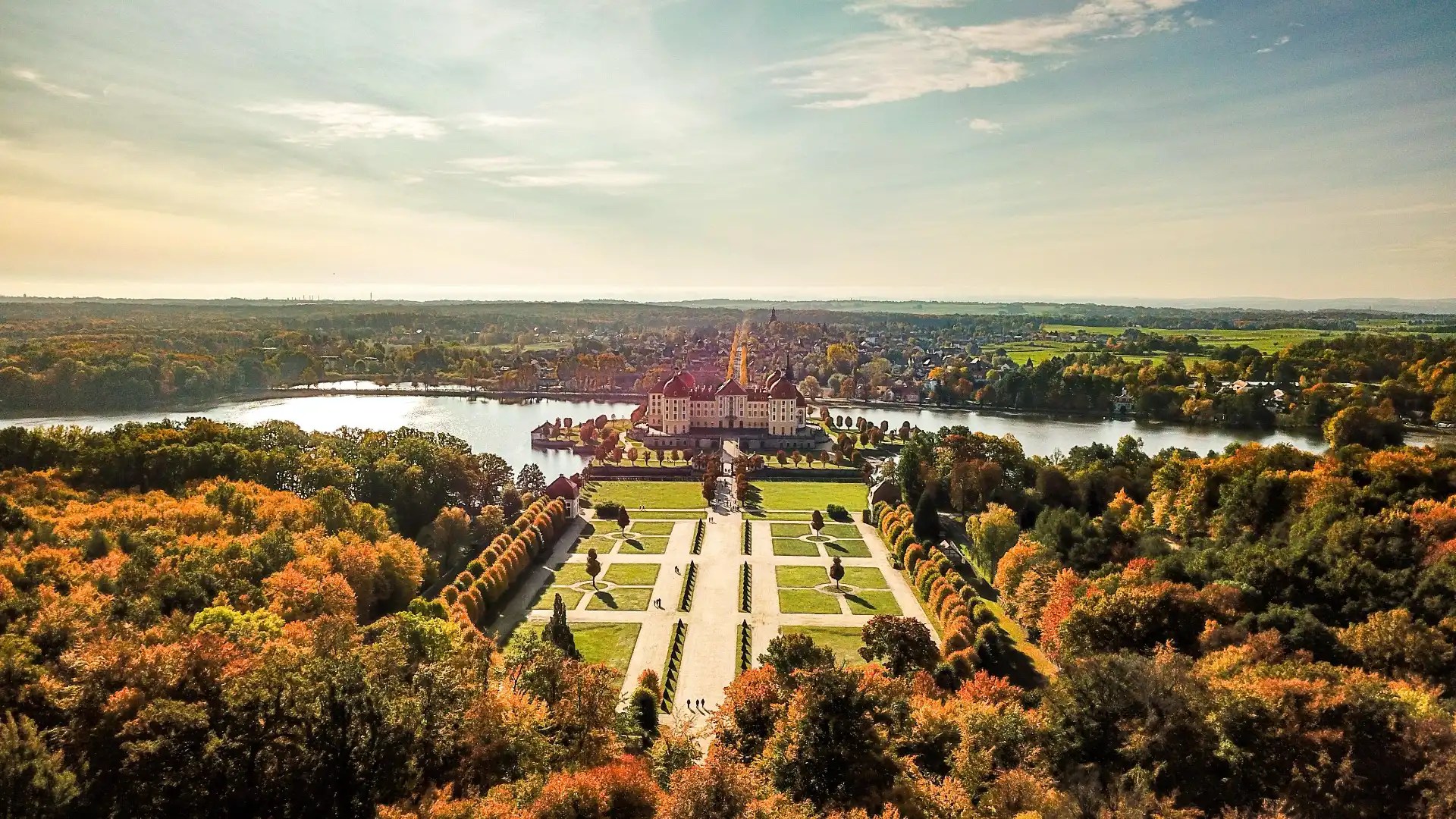
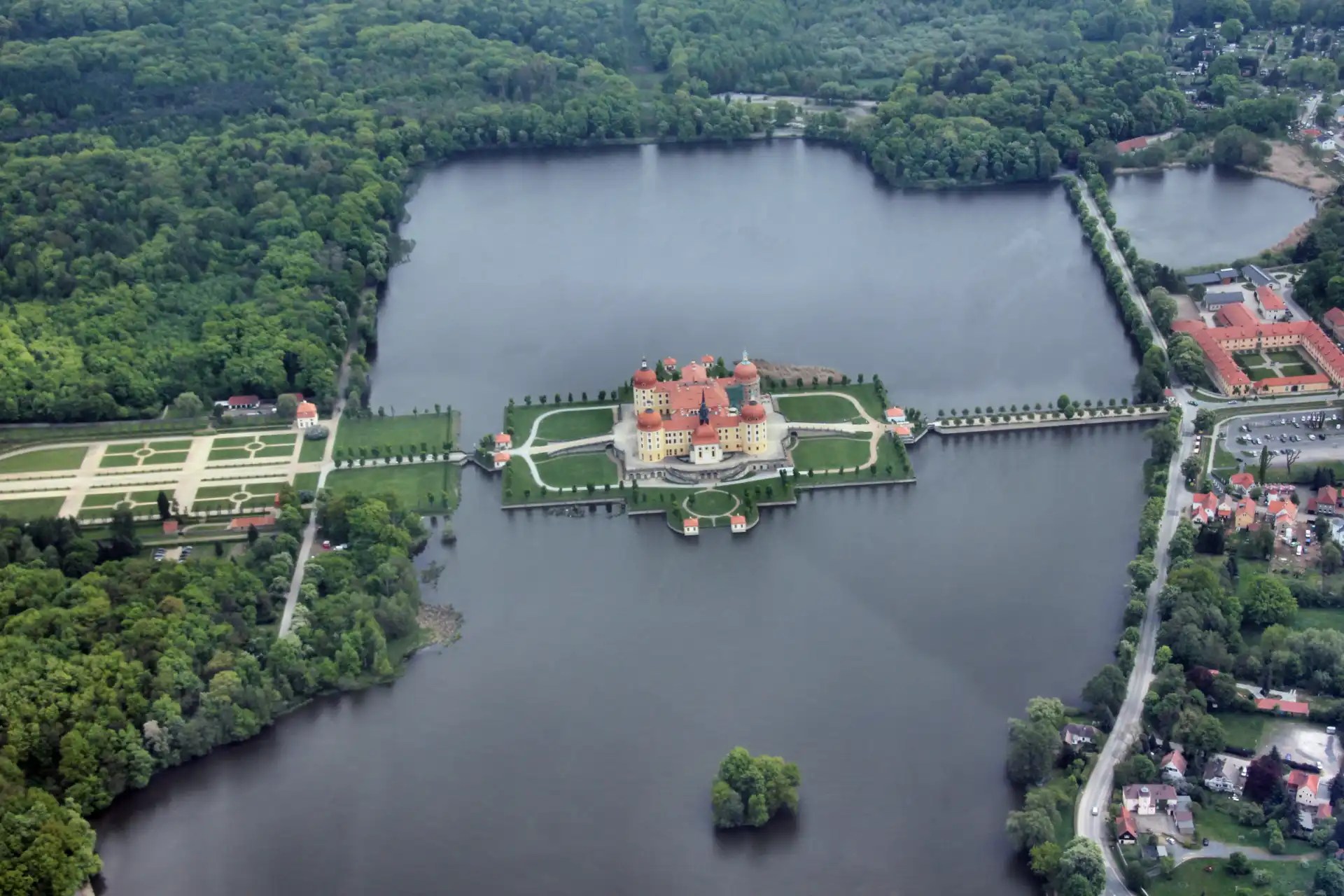
Moritzburg Castle near Dresden: a bed made of more than a million feathers, a lighthouse without a sea, Cinderella and a re-enacted naval battle.
Moritzburg tells not only of courtly splendour but of that old longing to order nature, to stage it – and still make it look as if everything had fallen into exactly the right place all by itself.
Not far from the Little Pheasant Palace you come across a jetty, a landing stage and a lighthouse.
What makes Moritzburg so special isn’t just the building itself but its setting. The palace sits in the middle of a waterscape, as if it had picked the finest spot and then decided to be especially photogenic there too.
Then there’s the film career. Some palaces have history. Moritzburg also has a role.
The Unconquerable Giant – Königstein Fortress
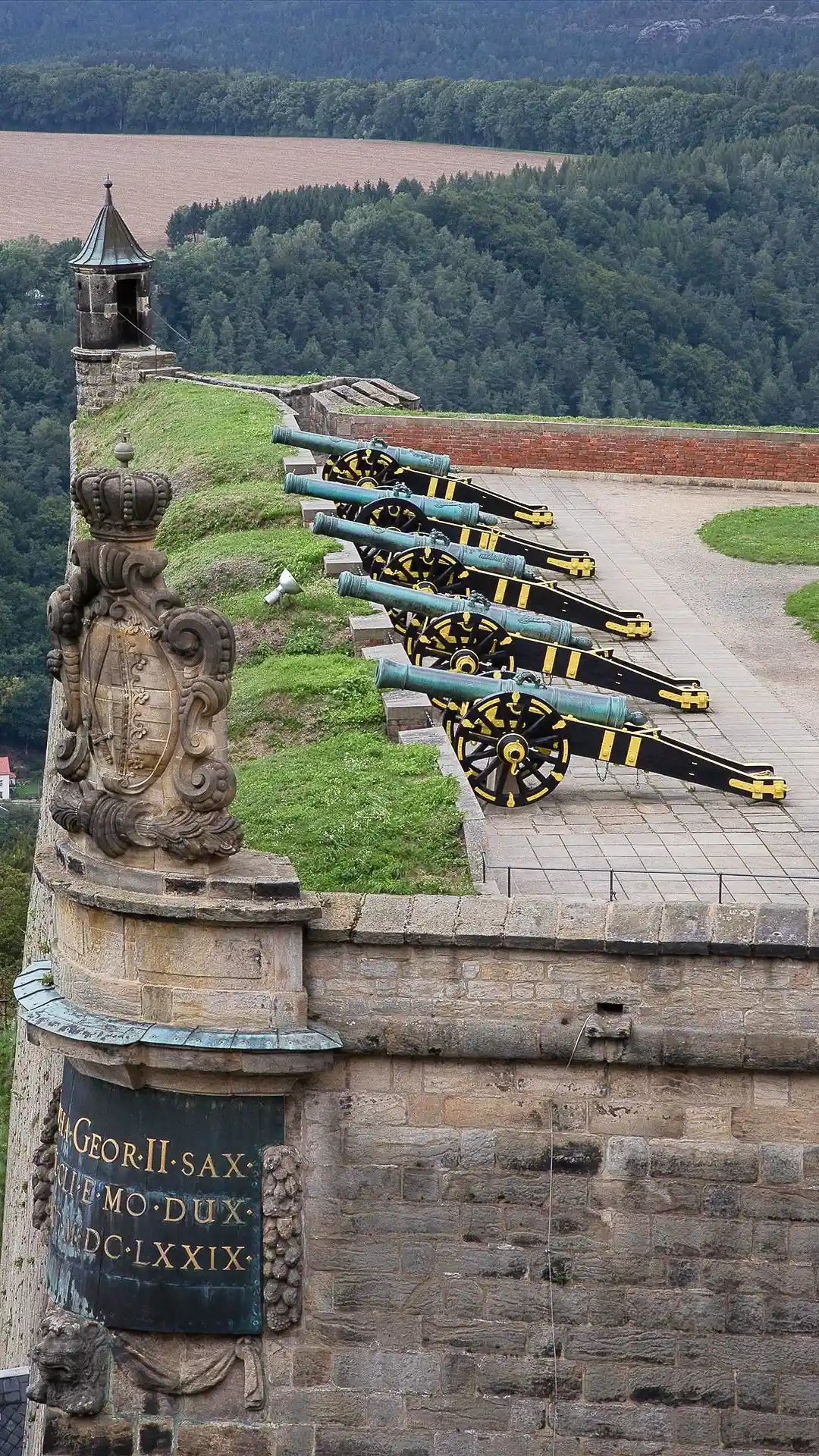
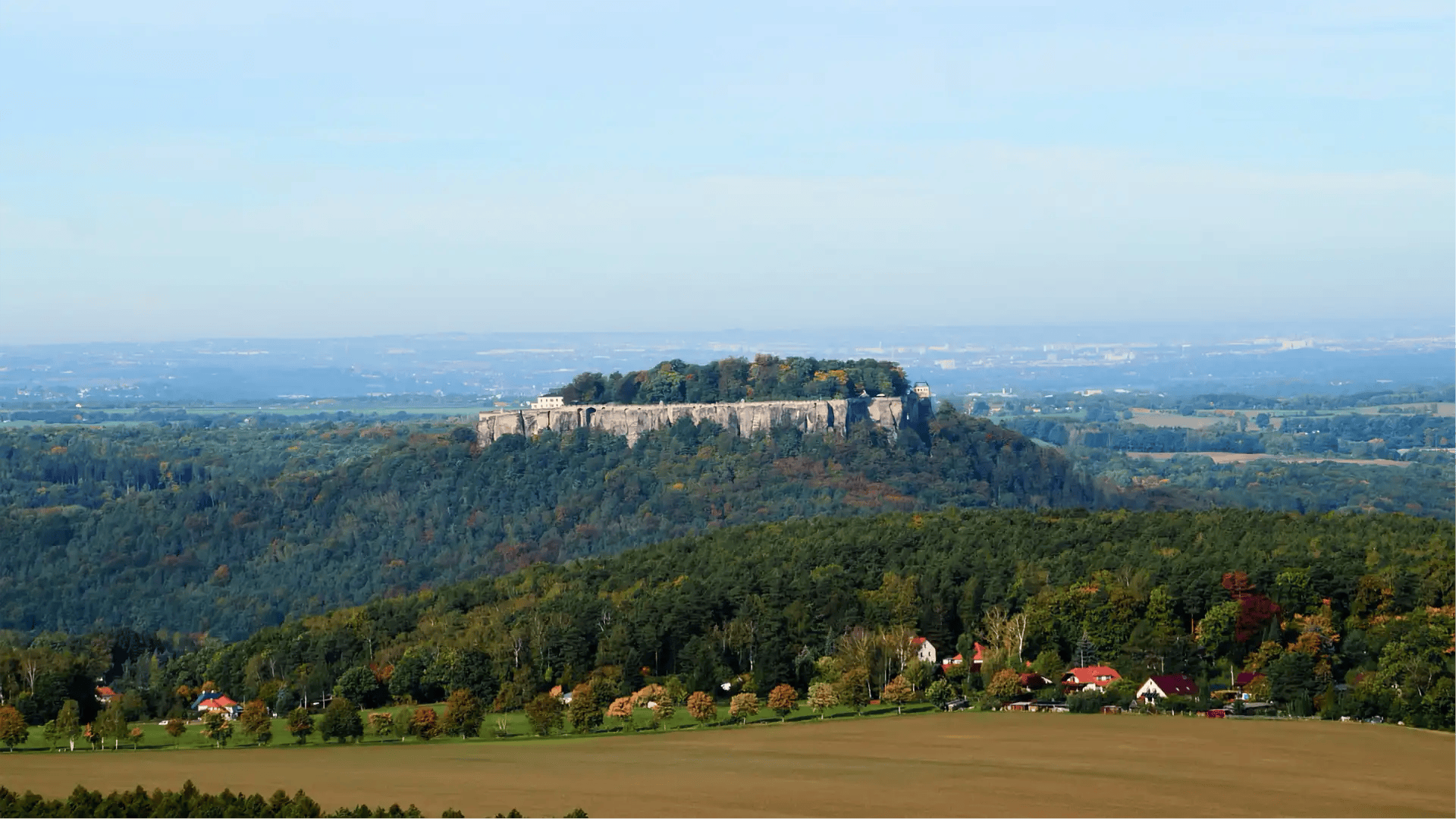
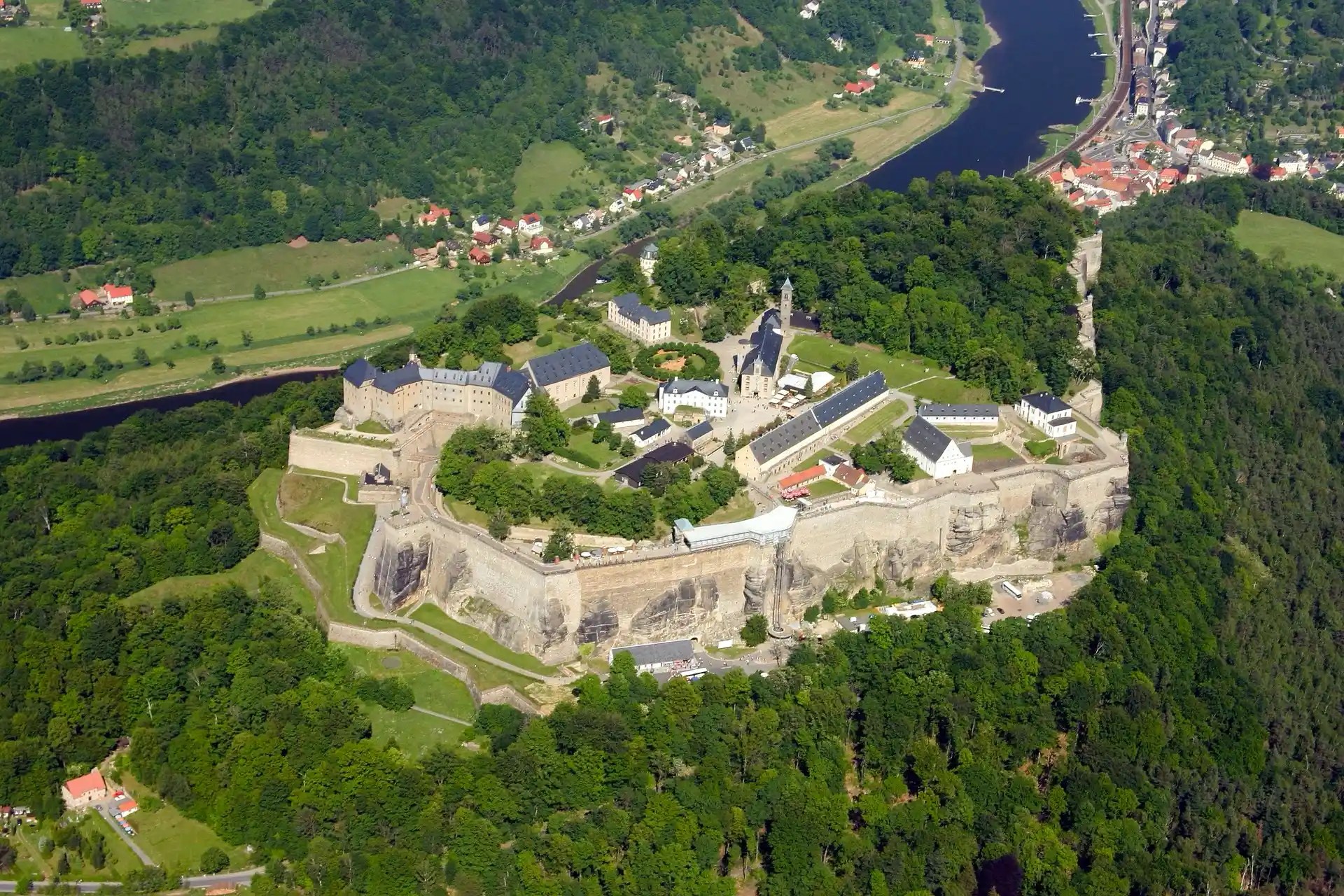
Königstein Fortress above the Elbe: a well 152 metres deep, a giant barrel, Böttger as a prisoner and General Giraud’s spectacular escape in 1942.
Its greatest strength was simply existing. The fortress was so fearsomely massive that in its centuries-long history it was hardly ever besieged.
Sometimes the landscape of Saxon Switzerland looks like an oversized adventure playground for giants. Rising from the middle of it is the Königstein – a striking table mountain that looks as if nature made it specially so that someone could set a crown of stone on top.
Visiting Königstein, you don’t simply walk around – you circle, discover, vanish briefly round a corner and reappear, as if the fortress had just quietly changed the scene.
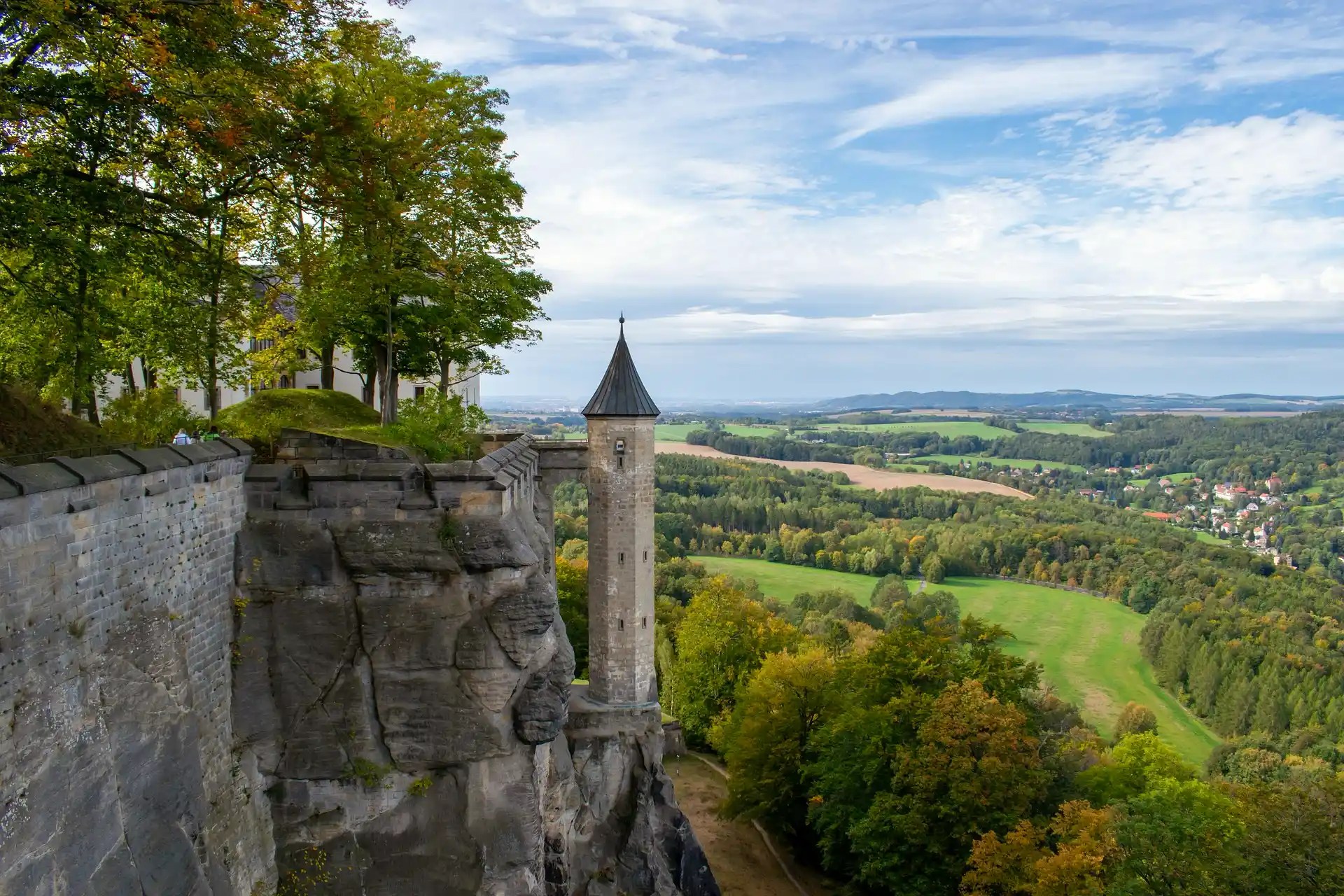
Some two kilometres of parapet run like a stone railing around the edge of the plateau. Up here, at the latest, you understand why this place was never conquered: you’re not standing in front of a wall – you’re standing in front of an argument.
Königstein Fortress is not a place you tick off ‘quickly’. It’s too big, too particular, too much a universe of its own.
It’s easy to picture the gentry sitting up there at table, all spruced up.
While wars raged all around, things often stayed suspiciously quiet up here – which made the place the perfect strongroom for Saxon electors and their treasures.
A Paradox in Stone – Weesenstein Castle
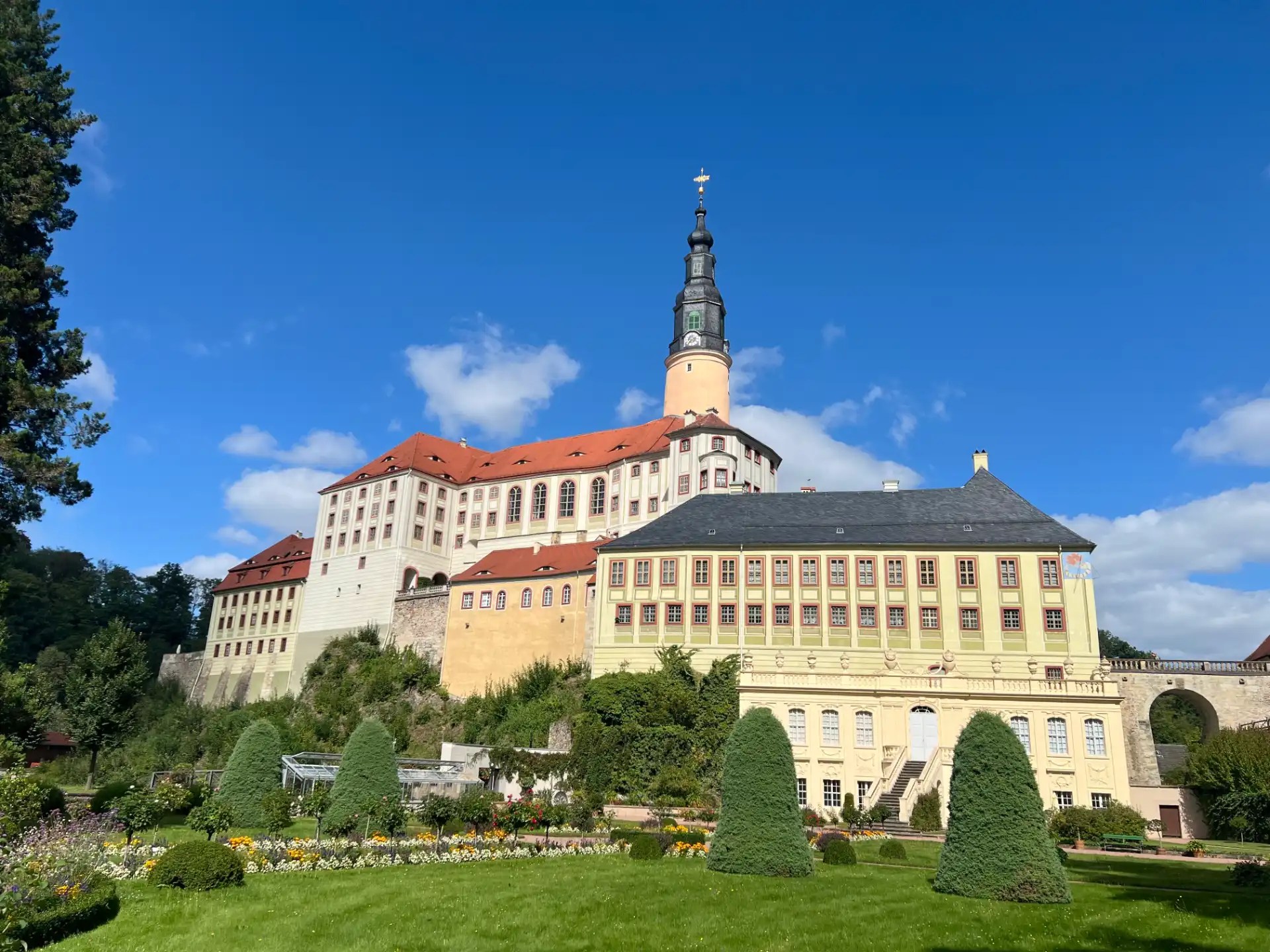
Weesenstein Castle in the Müglitz valley: horse stables on the fifth floor, a king who translated Dante, and a torture chamber that saved Dürer drawings.
Walk through the corridors today and you sense at once that the laws of physics governing floor plans took a short holiday here: it feels as if someone had pushed the cellar upstairs and pressed the attic into the rock.
But Weesenstein isn’t only good for contemplation – it also served as a strongroom. When Europe was taking itself apart in the war years, the palace became a secret haven for Dresden’s art treasures.
Weesenstein plays many roles: fortress, thinker’s study and rescuer of art.
It doesn’t feel preserved under glass, but rekindled time and again. And if you’ve still got some puff left after your walk through history, don’t rush off – just linger in the valley.
It all began in the 13th century as a sturdy fortress – purely practical, without any sense of romance, but with plenty of focus on protection and power.
Johann was a thinker, a reader of Dante with remarkable stamina. In the seclusion of Weesenstein he translated the ‘Divine Comedy’ into German – published under the pseudonym Philalethes, ‘friend of truth’.
It feels as if someone had pushed the cellar upstairs and pressed the attic into the rock. And indeed the banqueting halls are under the roof, the horse stables on the fifth floor and the lordly living quarters below the cellars.
Today Weesenstein is museum, stage and living monument all at once. It doesn’t feel preserved under glass, but rekindled time and again.
The Search for the Palace – Großsedlitz Baroque Garden
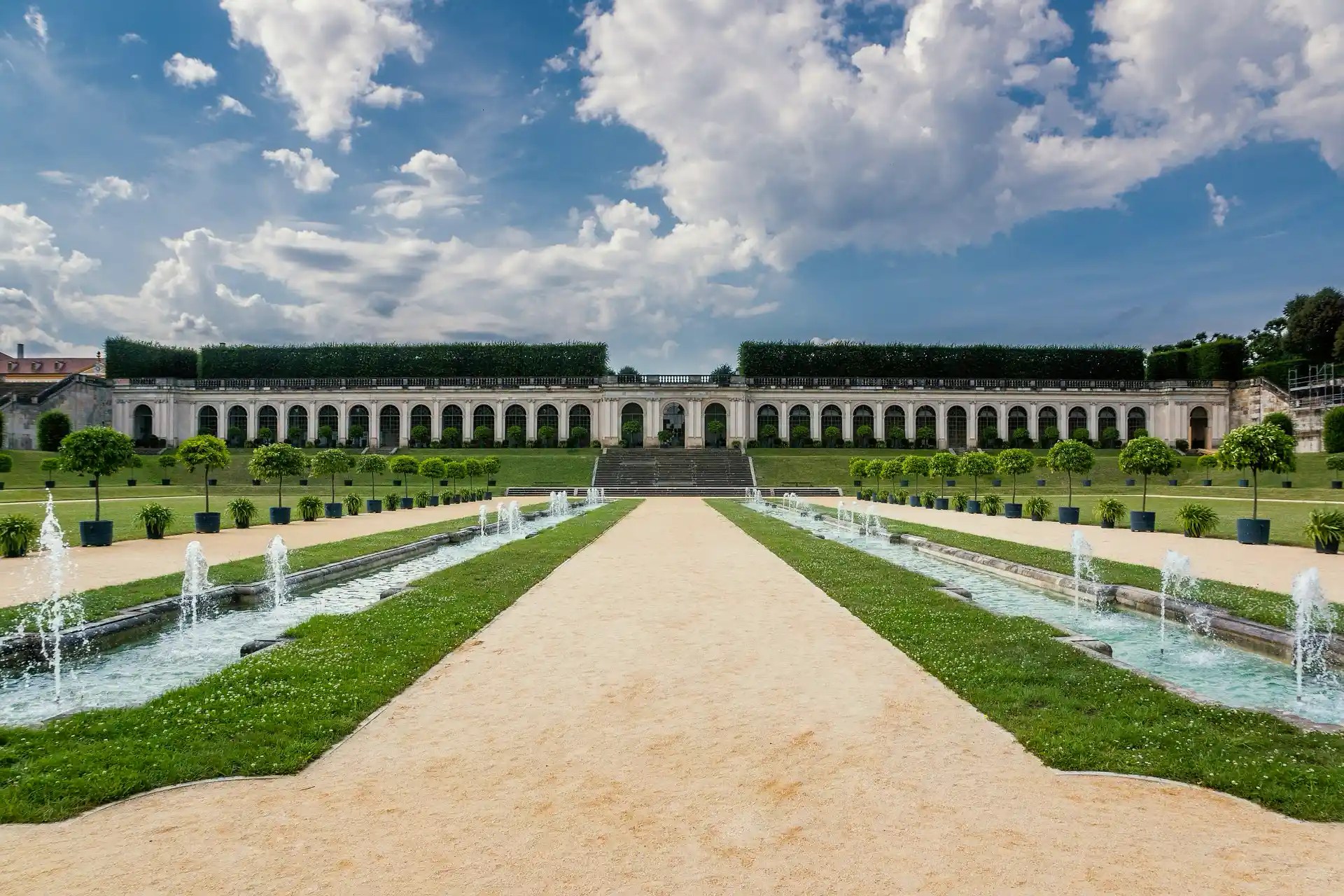
Großsedlitz Baroque Garden near Dresden: built for a Polish order, never finished – with the largest collection of bitter orange trees in the German-speaking world.
Großsedlitz is a bit like Versailles without the palace – just with more hedge and fewer chandeliers.
The garden is a centre of Saxon orangery culture and holds the largest collection of bitter orange trees in the German-speaking world.
After partial demolition in the 19th century, only one wing survives today: the Friedrichschlösschen, where people now drink coffee.
The orange trees spend the winter in the vast orangery buildings – so big you could almost mistake them for the missing palace.
The ‘Silent Music’: a sweeping flight of steps populated by sandstone putti playing instruments.
The great cascade at the edge of the woods was never finished – a waterfall that was never quite allowed to fall.
The book
The stories behind the pictures
Castles on basalt, palaces with poise and the traces that travelled from here out into the world – told in the book. The English edition is coming soon.